




What Is a High-Speed Lathe Used For?
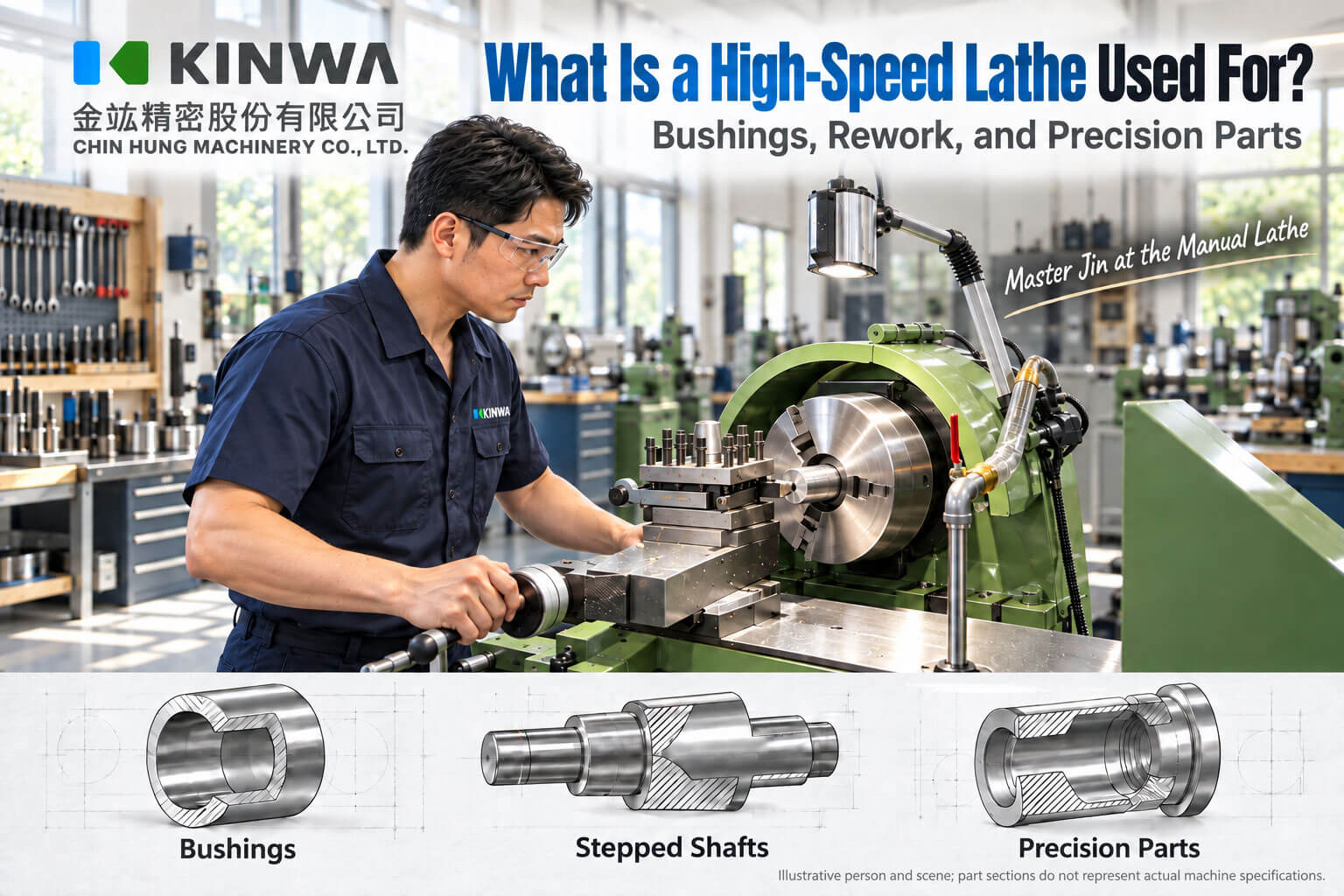
Manual Lathe Applications for Bushings, Rework, and Precision Parts
Common applications for high-speed lathes include manufacturing bushings and sleeves, reworking machinery components, and producing prototypes or small batches of small to medium-sized precision parts. When dimensions need to be adjusted based on measurements, or different workpieces are frequently machined in succession, manual operation offers flexibility for fitting work and high-mix, low-volume machining. A high-speed precision lathe may be suitable for these applications.
This article uses “high-speed lathe,” “manual lathe,” and “conventional lathe” to describe the same category of manually operated lathes, with a focus on high-speed precision lathes used for outside-diameter (OD) turning, inside-diameter (ID) turning and boring, facing, and threading. Before selecting a machine, identify the workpiece dimensions, material, tolerances, and production volume, then evaluate the machine specifications and cutting conditions.
High-Speed Lathe vs. CNC Lathe | Quick Guide
High-speed lathe: Consider for high-mix, low-volume work, fitting, repairs, and prototyping.
CNC lathe: Consider for high-volume repetitive machining, more complex operations, or a high level of consistency.
Before choosing: Confirm workpiece dimensions, material, tolerances, operations, and production volume.
1. Bushing and Sleeve Machining
Focus on Internal and External Diameters and Mating Surfaces
Machining bushings, copper-alloy bushings, and sleeves typically involves OD turning, ID turning and boring, facing, stepped features, and chamfering. These components often require specific fits on their internal or external diameters. In addition to dimensional tolerances, check the drawing for coaxiality, roundness, and surface roughness requirements.
Small-Batch Production and Fitting to Existing Components
For example, a machine may need a small number of replacement bushings with different bore sizes, or a new sleeve may need to fit an existing shaft. The operator can measure the workpiece and adjust its dimensions gradually toward the target. A high-speed precision lathe can be evaluated for this type of small-batch work with frequently changing specifications.
Check Stability When Machining Thin Walls and Deep Bores
For thin-walled bushings, assess the risk of deformation caused by clamping and cutting forces. Long sleeves may require additional workpiece support, while deep bores call for careful selection of boring tools, tool overhang, and chip evacuation methods. Depending on the workpiece geometry, a tailstock, steady rest, or follow rest may be needed. Verify the setup through trial cuts and measurement.
2. Component Rework and Equipment Maintenance
Localized Rework of End Faces and Mating Surfaces
Component rework is common for drive shafts, connectors, adapters, and machinery repair parts. Typical tasks include refacing, machining mating surfaces, correcting center holes, and restoring thread fit. First identify the areas that need rework and the target dimensions, then determine the workholding datums and machining sequence.
Machining and Fitting One-Off Repair Parts
For one-off parts, operators can align the workpiece, machine the required surfaces, and check the fit against existing components. This approach is useful when the repair involves a limited number of features, although setup time and inspection requirements still depend on the part's condition.
Establish the Repair Method and Acceptance Criteria First
Before rework, determine whether wear, runout, or damage affects the part’s suitability for use. For example, if a bearing seat on a shaft is already below the required diameter, turning cannot restore the missing material. Evaluate replacement, material buildup, or another repair method before planning subsequent machining. If drawings are unavailable, establish the required mating dimensions and acceptance criteria first.
3. Machining Small to Medium-Sized Precision Parts
Assess Prototyping Needs Based on the Turning Operations
A high-speed precision lathe can be considered for prototypes or small batches of mechanical components, instrument sleeves, and locating parts. During product development, initial dimensions may need to be checked through trial assembly before the design is finalized. For parts requiring mainly turning, boring, and facing operations, operators can machine a prototype, inspect its dimensions, and make further adjustments based on the test results.
Verify Machining Capability Against Tolerances and Measurements
Precision machining should be assessed against the specified tolerances and inspection requirements. Machine condition, rigidity, tooling, workholding, temperature changes, and measurement methods can all affect dimensional accuracy and surface quality. When machining stainless steel, copper alloys, or aluminum alloys, select the spindle speed, feed, and depth of cut to suit the material and cutting tool.
For tight tolerances, verify machine capability through trial cuts and measurement. A CNC lathe may be worth evaluating when operations are complex or consistency is required across large quantities of parts. Some dimensional or surface requirements may also call for subsequent finishing processes.
How to Select Equipment for Your Machining Needs
When selecting a lathe, start by identifying the required machining operations, workpiece dimensions, material, tolerances, and production volume. For manual lathes, check the machine's workpiece capacity, spindle speed range, feed range, and available workholding options against the intended applications.
A high-speed precision lathe can be considered for small-batch machining, component rework, and fitting tasks where operators need to measure and adjust individual workpieces. However, suitability also depends on the machine's rigidity, cutting conditions, and required accuracy. The term “high-speed” should not be judged by maximum spindle RPM alone.
For repetitive production or more complex machining requirements, a CNC lathe may be worth considering. The choice depends on the operations, production volume, and level of consistency required. For a more detailed comparison, see KINWA's Manual Lathes vs. CNC Lathes: 10 Key Buying Factors for Machine Shops.
| Machining Need | Equipment to Consider | Key Selection Factors |
| Small-batch production of bushings and sleeves | High-speed precision lathe | Workpiece dimensions, tolerances, wall thickness, bore depth, and support |
| One-off rework and equipment maintenance | High-speed precision lathe | Workholding datums, extent of wear, repair method, and acceptance criteria |
| Precision prototypes and small batches | Manual or CNC lathe, depending on accuracy and operations | Dimensional tolerances, surface requirements, and trial-cut measurements |
| High-volume repetitive turning or more complex turning operations | Consider a CNC lathe first | Production volume, consistency, automation, and changeover needs |
This table provides an initial guide to machine selection. The final choice depends on the workpiece, machining operations, tolerances, and batch size.
Frequently Asked Questions
Q1 | Are High-Speed Lathes, Manual Lathes, and Conventional Lathes Different Machines?
No. In this article, high-speed lathe, manual lathe, and conventional lathe refer to the same category of manually operated lathes. The terminology may vary by market and industry usage.
Q2 | Is a High-Speed Lathe Always More Suitable Than a CNC Lathe for Small Batches?
No. A high-speed lathe may be suitable for high-mix, low-volume work, fitting, repairs, and prototyping. However, a CNC lathe may still be more suitable when operations are complex, a high level of consistency is needed, or future automation is planned.
Q3 | What Are the Common Applications of a High-Speed Lathe?
Common applications include small-batch production of bushings and sleeves, rework of machinery components, and prototypes or small batches of small and medium-sized precision components.
Q4 | How Do I Choose Between a High-Speed Precision Lathe and a CNC Lathe?
Consider a high-speed precision lathe first for work that requires shop-floor measurement, fitting, or small-quantity prototyping. Consider a CNC lathe first for high-volume repetitive machining, more complex operations, or consistent results across a batch. In either case, verify that the machine can meet the workpiece size, material, and tolerance requirements.
Lathe Selection Support from KINWA
KINWA Lathe is the brand of CHIN HUNG MACHINERY CO., LTD., offering manual and CNC lathes. The CH Series consists of high-speed precision lathes. The CHD Series is designed for heavy-duty turning, while the CHK Series is intended for larger workpieces and heavier cutting applications. Workpiece size capacities and configurations vary by series, so selection should be based on workpiece dimensions, cutting loads, and operating requirements.
Looking for equipment to machine bushings, rework components, or produce precision prototypes? Send us your workpiece drawings or measured dimensions, material, features to be machined, tolerances, and quantity per batch. KINWA can use this information to help evaluate suitable models and configurations. If complete drawings are unavailable, the required mating dimensions and rework details can provide a starting point for discussion.
Share Your Workpiece Requirements to Discuss Models and Configurations
KINWA: Your Professional Partner in Lathe Selection
Best Choice for Lathe